Walkable Areas in Charlottesville, VA: Where to Live
When people call me about moving to Charlottesville VA, there's one request I hear all the time: Pam, I want to live somewhere walkable. But here's the problem. What exactly does walkable mean to you? Because there's a huge difference between living in a beautiful neighborhood where you can walk your dog on a sidewalk and living somewhere where you can walk out your front door, grab coffee, go to dinner, get groceries, go to work, catch public transportation, and maybe actually leave your car sitting in the driveway.
Charlottesville has both. And honestly, parts of it absolutely deliver on walkable living, but I don't want you moving here thinking you're going to ditch your car entirely and discover three weeks later that your nearest grocery store is two and a half miles away from your house.
For this video and article, when I say walkable, I don't simply mean sidewalks. I'm talking about what I refer to as walkable living. Can I walk from my house to something I'm going to use? Coffee, restaurants, shopping, a grocery store, a park, my workplace, downtown. Can I connect to public transportation? That's the standard we're using today because a beautiful subdivision with five miles of sidewalks can be wonderful, and maybe that's all you need. But if those sidewalks don't take you anywhere in particular except around the subdivision, that's a very different lifestyle.
I'm going to show you six very different versions of walkability in and around Charlottesville: Old Trail, the Barracks Road corridor, Belmont, North Downtown, Greenbrier, and the Barracks-Maure Drive corridor. Stay until the end because I'm going to talk about which areas make the most sense depending on what you mean when you tell me you want walkable.
Table of Contents
- Old Trail: Walkable Planned Community in Crozet
- Barracks Road Corridor: Daily Needs Walkability in Established Neighborhoods
- Belmont: Historic Neighborhood to Downtown Connection
- North Downtown: Urban Walkable Living at a Premium
- Greenbrier: Walk-Friendly Residential Living
- Barracks-Maure Drive Corridor: Suburban Connectivity Along Route 29
- Which Walkable Charlottesville Area Matches Your Lifestyle?
- Conclusion
Old Trail: Walkable Planned Community in Crozet
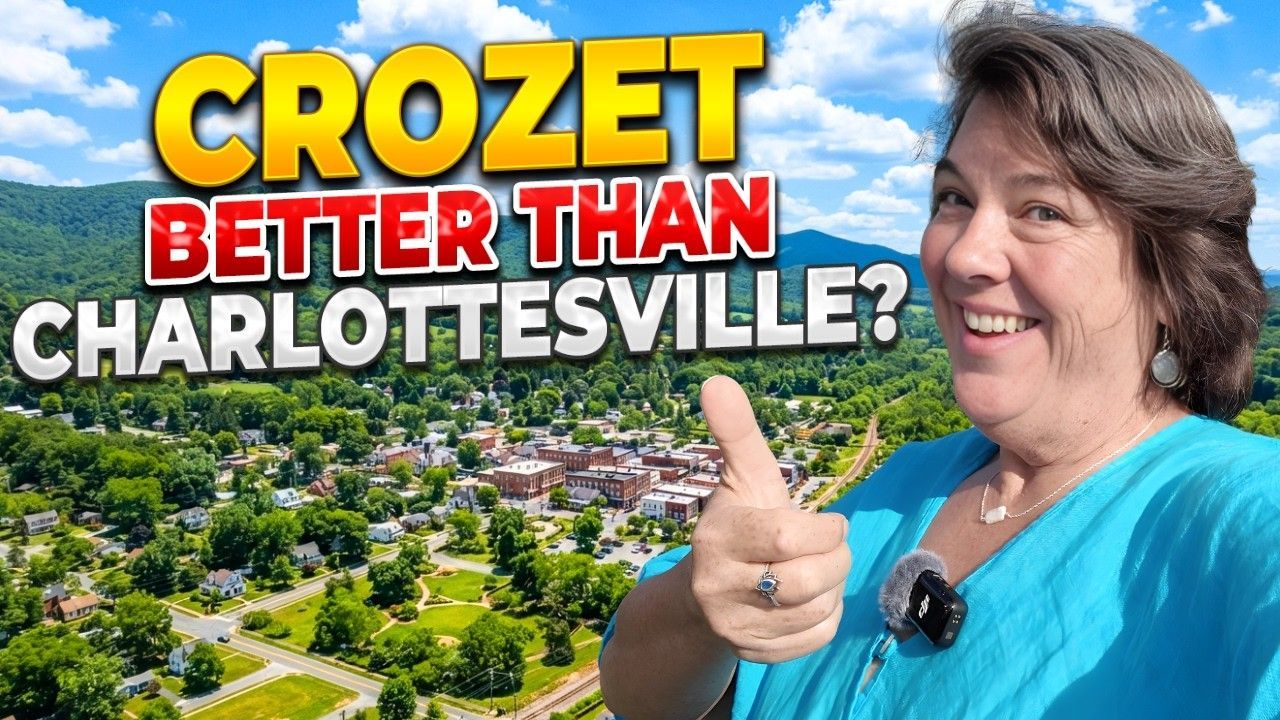
Let's start outside of Charlottesville proper. We're heading west to Old Trail , and technically we're not in the city of Charlottesville. We're actually in Crozet, which is in Western Albemarle. But I absolutely wanted Old Trail in this article because when someone tells me they want newer construction, mountain views, and some degree of walkable living, this is one of the first places I think about.
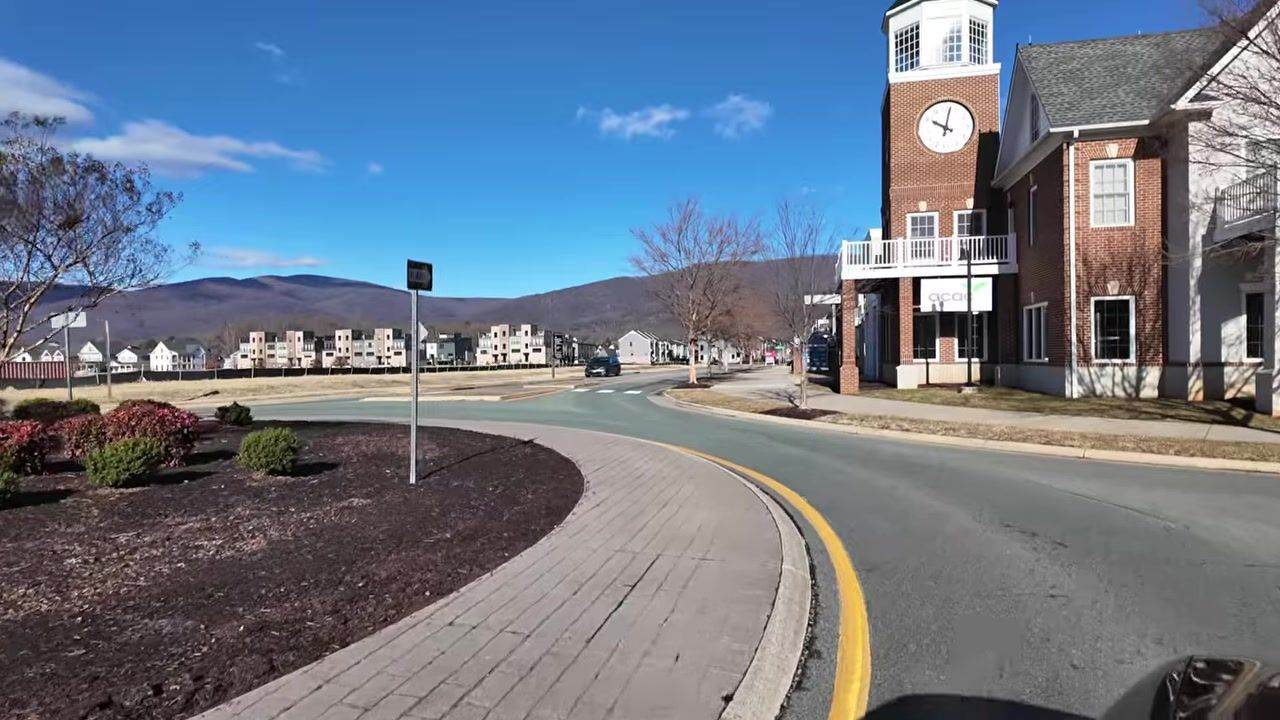
Old Trail was designed around a more new urbanist concept. It was really the first of its kind in our area. Instead of building houses over here and putting all the commercial development miles away over there, the idea is to combine different styles of housing with a central village area. Old Trail's own description calls the village center mixed-use. It has housing, local businesses including dining, shopping, and several different services from financial planning to medical to dental at a really great variety. There are townhomes, villas, apartments, and other housing choices within the broader community.
This is what I mean by the distinction between sidewalks and walkable living. If you live in the right part of Old Trail, you aren't simply walking around your block. You can actually walk to something. You can walk to restaurants. You have businesses and services. You have recreation. You have community events. Depending on where you live within Old Trail, you've also got connections into the broader Crozet trail system. All of this is surrounded by Blue Ridge Mountain views.
What Old Trail Offers and What It Doesn't
But this is important. I would not describe Old Trail as I-never-need-a-car-again. You are absolutely still in Crozet. So for many jobs, major shopping trips, Charlottesville, UVA, Costco kind of stuff, the airport, whatever it may be, you're probably going to be getting into your car. So I would call this getting walkability within your community rather than urban car-free living. That's a very important distinction.
Housing is another reason people really love Old Trail. You've got everything from attached housing and smaller footprint options to mansion single-family homes. So someone downsizing and someone wanting a larger family home could potentially both be looking at Old Trail but end up with completely different houses.
Who do I think this would work for? Someone who tells me, Pam, I want newer, I want sidewalks, I want somewhere I can get outside and walk. I'd love to be able to walk to dinner or coffee on occasion, but I don't necessarily need to walk to work. Old Trail would make a ton of sense. And obviously these mountain views do not hurt.
Barracks Road Corridor: Daily Needs Walkability in Established Neighborhoods
Okay, so here we are at the Barracks Road area . Quite honestly, it was a toss-up between the UVA residential areas and Barracks Road, but I feel they both mimic each other. And I really like the Barracks Road area because I think it is much more residential focused, more so than the UVA area, which you're going to have a lot of intermingling between students and residential. So it's not as residential friendly.
We're talking about several established residential pockets surrounding one of the biggest everyday shopping areas. And this is where we get into something that I think is really important. Can you walk to the things you actually need on a Tuesday afternoon? Not a trail, not a park, not just somewhere to walk the dog. I'm actually talking about groceries, coffee, dinner, lunch, pharmacy, shopping, services, the everyday stuff.
Barracks Road Shopping Center is right down the street. You've got a huge concentration of businesses in a relatively compact area. You've got Kroger and Harris Teeter, although heads up, Kroger is leaving Barracks Road. So both of those would be servicing you for grocery stores. You've got restaurants and coffee, shopping, banks, services. You have everything from grabbing lunch to picking up something you need for your house. And then right across and around that same area, we've got commercial development all along the Emmett Street corridor.
Location Within the Neighborhood Is Everything
If you live in the right residential pocket around Barracks Road, and I'm talking right now I am in Out of Bounds , which is a really nice newer development. But you know what? It backs up to Canterbury Hills , which is an original longtime Charlottesville neighborhood, but it does not have sidewalks. You have to go to Barracks Road itself, and then you can pick up sidewalks.
I can show you houses that look incredibly close to Barracks Road on the map. But the pedestrian route involves some really uncomfortable intersections. Or like I said, Canterbury Hills doesn't have any sidewalk connections that you would expect, and that changes everything. Then honestly, I can show you another house just around the corner where you can walk out the front door, be over to the area and getting groceries or meeting somebody for lunch.
That's why half a mile from Barracks Road doesn't automatically equal walkable. I want you to know, how do I actually get there? And the housing around here is very different from something like Old Trail. You're generally looking at very established Charlottesville neighborhoods. You'll see older brick homes, colonials, a lot of the older Charlottesville ranchers, some remodeled homes, some townhomes and condos in portions of the broader area. Mature, beautiful trees, beautiful established streets. And you're getting something that's increasingly really hard to duplicate with new construction. Proximity.
You're close to shopping, you're really close to UVA, you're actually fairly close to the downtown area, and you're really close to Route 29, which is one of our major corridors. And depending on exactly where you live, you're also positioned for public transportation.
Who This Area Works For
This can be particularly interesting for someone who wants to live in an established Charlottesville neighborhood but doesn't necessarily want the much more urban feeling of, say, North Downtown. Think about what living near here could potentially look like. We're talking Saturday morning, walk over down to Barracks Road, grab a coffee, maybe need a few groceries. You walk over there, meet a friend for lunch. Maybe you don't even need your car the entire morning. You've got options.
This is the type of walkability I think people sometimes really do forget about because everybody thinks walkable has to mean cute little cafes and brick sidewalks. It doesn't. Sometimes walkability means I can get milk without starting my car. And honestly, that in itself can be pretty valuable considering most of even the neighborhoods I've covered today are going to be food deserts. Only a few are going to actually have walkable access to groceries. That can be huge and valuable.
But now let me give you the downside. Barracks Road and Emmett Street are very busy. We're talking main major corridor. There is going to be traffic. There are major intersections and pedestrian comfort can change dramatically depending on exactly where you are. Now, all the corridors on the main roads are sidewalk capable and friendly, sometimes bike path friendly, but definitely pedestrian sidewalk. Pedestrian comfort is going to be up to you.
So who would I put here in the Barracks Road area? I would say someone who calls me up and says, Pam, I want to be in Charlottesville. I don't necessarily need to be downtown, but I want to be close to things. I'd love to walk to the grocery, some restaurants. I want an established neighborhood. I don't need to drive fifteen minutes every time I need something. Then I'm absolutely going to show some of the residential areas around Barracks Road.
Belmont: Historic Neighborhood to Downtown Connection
Okay, so here we are. This is Charlottesville walkability. We are in Belmont , and Belmont is one of those neighborhoods that people absolutely fall in love with because it gives you something that actually is almost impossible to replicate in our area. You have a real residential neighborhood, but you are right beside the Charlottesville downtown area.
Belmont-Carlton is one of Charlottesville's historic neighborhoods. It has much of its development actually dating back to the late 1800s, so you're absolutely going to be seeing older homes, bungalows, front porches. Renovated houses, homes that haven't been renovated, smaller lots. There may be some new infill. You're also going to find a lot more architectural personality than you'll find in any brand new subdivision of the past twenty years.
But here's what puts Belmont in this article. You can live here and actually walk to restaurants. You can walk to parks. And depending on exactly where you live, downtown Charlottesville is actually a really reasonable walk. And once you're downtown, you have access to the downtown mall, shopping, restaurants, entertainment, City Hall offices, and additional transit connections. The city itself has invested in pedestrian improvements in and around the Belmont area for years, including crosswalks and a lot of streetscape stuff to help with safety.
The Hills Are Real
So this is much closer to what people imagine when they tell me, I want to walk out my front door and actually go somewhere. Although here's something that many don't know until they get here and they actually start walking or they actually start biking, and that is the hills. Right now I'm on the top, and as you can see, either way I'm going it's going to be hills one way or another, right?
So guys, remember, this is not the beach. Some of these walks are going to look very different to you going home than they did going to dinner. So when you're looking at a house, you're not only looking at mileage, but we're looking at the terrain, we're looking at sidewalks, we're looking at the safety of crossing and the lighting. We're looking at whether you would realistically want to make that walk.
Belmont is an interesting option for somebody working downtown as well. If you're working around the downtown mall, City Hall, the courts, restaurants, businesses, offices downtown, suddenly walking to work becomes a real nice possibility. And that's completely a different definition of walkability than Old Trail. Old Trail gives you a walkable community. Belmont potentially can give you a walkable lifestyle.
And remember, location within Belmont absolutely matters. Belmont covers more than just a few blocks everybody thinks of when they come here or go to one of the restaurants. So don't assume every Belmont address gives you the exact same walkability.
North Downtown: Urban Walkable Living at a Premium
Welcome to North Downtown . If your dream is to park your car on Friday evening and not touch it again until Monday morning, well, this is where Charlottesville starts getting very beautiful and interesting and expensive.
The city's own neighborhood data shows just how different North Downtown is from other places in much of the Charlottesville area. North Downtown includes the Downtown Mall along with all the residential streets around Park Street and other areas immediately surrounding the city's historic core. The city describes the Downtown Mall as home to restaurants, shops, galleries, music venues, and City Hall is actually on the eastern end of it along with the police station.
And here's an interesting number for you. The city's North Downtown fact sheet actually reports a walk score of, get this, 84, along with bike and transit access. And it says about 14% of commuters walk to work. And that is all coming from the available ACS data information. Now that is the epitome of walkable living, but that is not normal.
What Urban Walkability Actually Looks Like
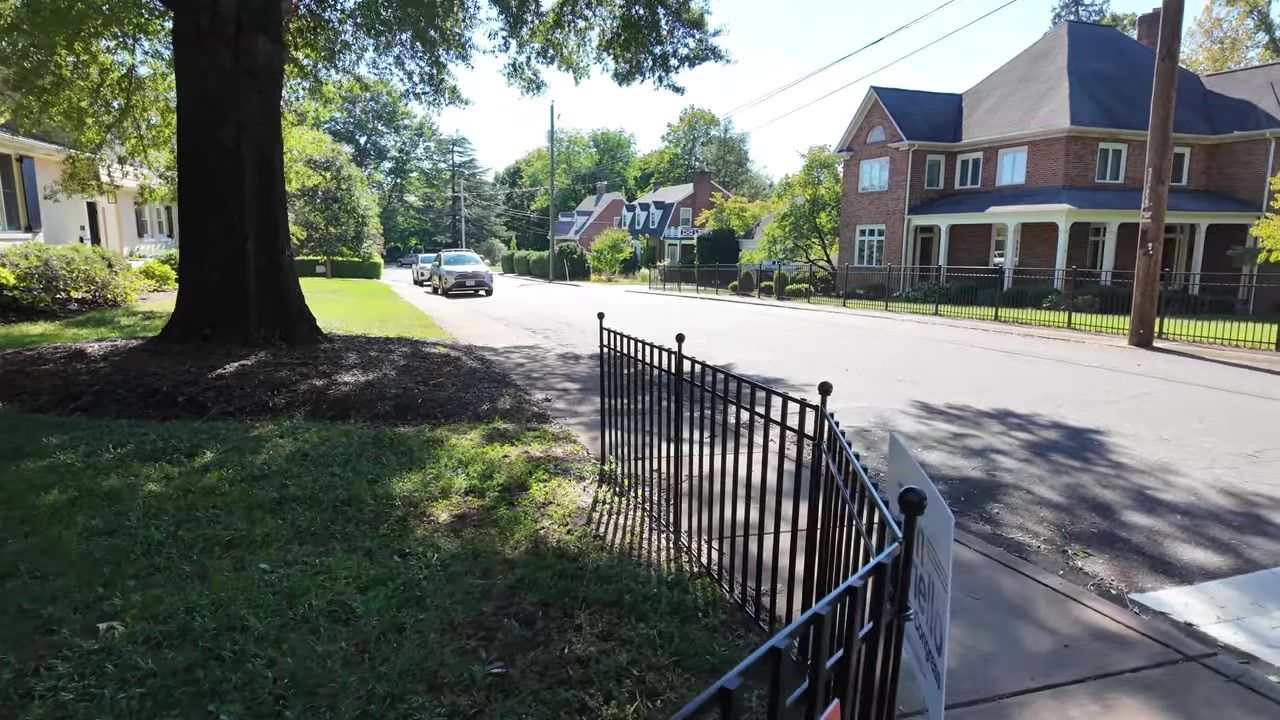
I want you to imagine living here. You can potentially walk to downtown. You could walk to coffee. You could walk to dinner. You could walk to a concert or other performances. You could walk to a couple different farmers markets. Walk to City Hall, walk to the entertainment. And depending honestly on your exact location and your tolerance for distance, you've actually got connections toward West Main Street and UVA.
West Main is particularly important because it's essentially the direct connection from the downtown mall area to the University of Virginia with businesses, restaurants, and hotels all along that corridor. Oh yeah, look, there are sidewalks. The sidewalks actually connect residential life to commercial life and employment destinations. So it's almost a perfect combination. That is the definition that we're looking for in this article.
The Trade-Off: Housing
But what is the trade-off? Well, let's face it, housing. Because look at this, you're not coming to North Downtown looking for a half an acre brand new construction or 4,000-square-foot house with a three-car garage, especially not for suburban pricing. The city reports North Downtown as having one of Charlottesville's highest median house values. And housing here includes historic properties as well as condos, apartments, and other urban options.
You at this point are paying for the location, you're paying for the scarcity, and sometimes you are trading new construction, bigger lots, and more, if any, garage space for ability to walk out your front door and actually just be in and a part of Charlottesville. This is a lifestyle destination, and this is something I talk about with my relocation clients consistently.
Don't start with the house. You need to start with the lifestyle because if walkability is truly one of your top three priorities, buying twenty minutes outside of town because you can get another 800 square feet may completely defeat the reason you wanted Charlottesville and walkability in the first place.
Greenbrier: Walk-Friendly Residential Living
So Greenbrier is exactly why I made the distinction at the beginning of this article, because parts of Greenbrier are wonderfully walkable. Tree-lined streets, established homes, parks, and honestly even schools. These are neighborhood streets, easy access towards shopping, but the same walkable living experience as North Downtown? Absolutely not.
Because here's the thing, and I don't want to pretend that Greenbrier is North Downtown. Greenbrier is an established, predominantly city neighborhood, largely developed in the mid-century era with ranchers, split levels, and mature streets. It is positioned near parks, within reach of shopping areas, including the Barracks Road corridor, the Stonefield corridor, Raya Road. For me, the appeal is that you're still very much in Charlottesville and relatively close to major shopping, including Whole Foods and Trader Joe's. You're not way out in the county.
You have recreational walking opportunities depending on the exact street. You may have pedestrian connections that make some everyday destinations absolutely accessible, but I'm probably not going to be telling somebody, sell your car, you're good. That could not be further from the truth. You're probably going to be keeping the car.
A Nice Compromise
What Greenbrier can give you is really a nice compromise. You have this established residential feel, you have beautiful yards, mature trees, quieter streets without feeling completely disconnected from Charlottesville. And that's really important because not everybody is asking for walkability and they want that urban density.
Sometimes when somebody tells me they want walkability, what they actually mean is, Pam, I don't want to live somewhere where I have to get in my car just to walk the dog, just to take a bike ride, just to enjoy nature. And that's different. And Greenbrier can answer that request much better than some rural or conventional suburban neighborhoods. But if what you are saying to me is, I want to walk to work, well, you know what, then we're going to be looking at someplace different.
Barracks-Maure Drive Corridor: Suburban Connectivity Along Route 29
Next up, Barracks-Maure Drive . This one may surprise you because if you have visited Charlottesville, chances are when you are thinking about Route 29 North, you're thinking traffic, shopping centers, Costco, big roads, and probably not charming pedestrian living. But the Barracks-Maure corridor actually has changed tremendously, and this is where we need to talk about the forms of walkability.
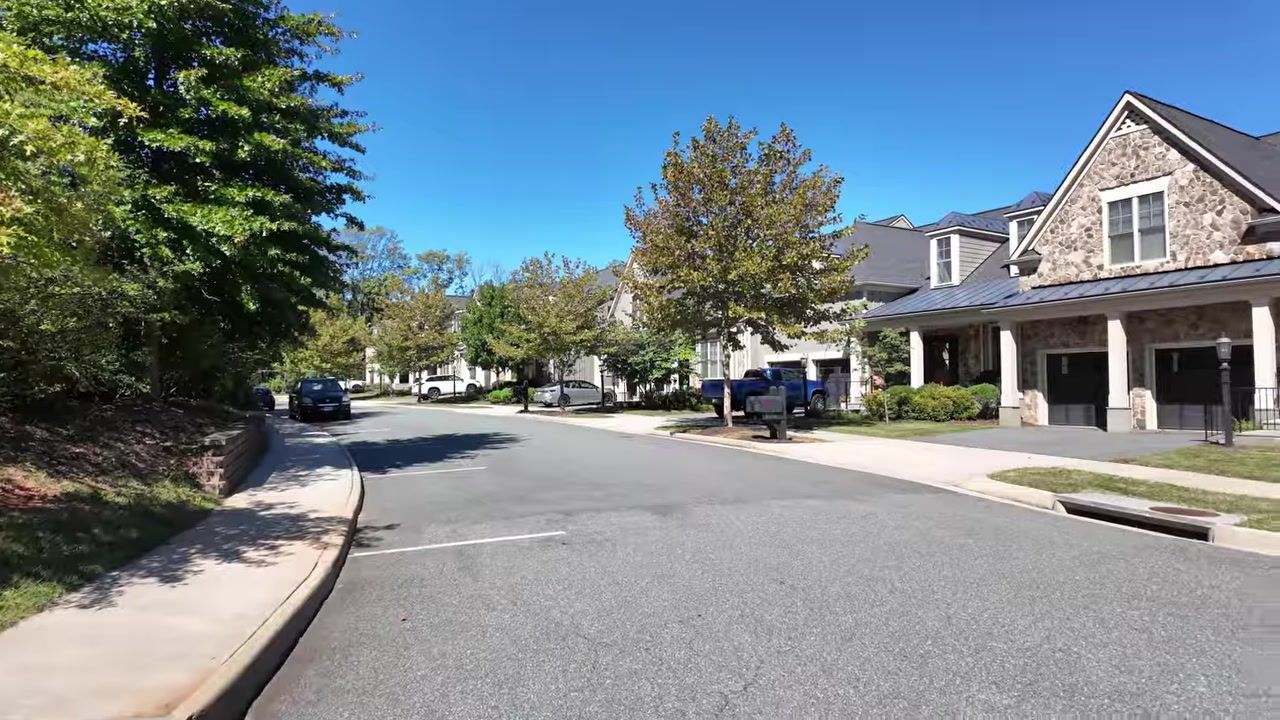
There are newer residential communities and apartments along and near this corridor, sidewalks, pedestrian connections, and you're actually positioned close to one of the largest connections of shopping, services, and employment in the Charlottesville area. You've got Route 29 corridor right here. You've got major shopping right here, restaurants, medical offices, professional offices, grocery options, potential workplaces.
Not Charming, But Potentially Functional
This is not Belmont, not even pretending. It's not downtown. It doesn't have the old Charlottesville grid where you walk past historic homes and end up at a locally owned cafe. It's a much more suburban form of walkable living. And depending on the exact property, this is where I want you to pay close attention. Because one address may have a fabulous pedestrian connection to what you want, and another property that's only a short distance away on a map may require crossing major roads that you would not want to cross any day of the week.
That's why when someone tells me walkability is important, I don't just say, oh, look at the walk score. I want to know where are you actually trying to walk to? Do you want groceries? Do you want to walk to your workplace? Do you want restaurants? Do you want a bus stop? Because those are completely different searches.
Public Transportation Matters
And that's another piece of this: public transportation. Charlottesville Area Transit operates fixed route services around Charlottesville and portions of the surrounding urban area. And CAT, as we call it, is usually fare-free. Routes and stops can change, so make sure you're checking the access, because that can be critical in your move. But check current route maps for specific properties rather than assuming it's convenient because a bus happens to run somewhere nearby.
For somebody who works somewhere along the 29 corridor, this Barracks-Maure area can actually be much more interesting than initially it appears, and that's why it made my list. It's important to know what you're trying to walk to. Groceries, workplace, restaurants, bus stop are different searches. Pedestrian connection quality varies significantly. One address may be great while a nearby property is not walkable.
Which Walkable Charlottesville Area Matches Your Lifestyle?
So let's wrap this up and talk comparisons. Because just like Belmont, Greenbrier, and the downtown area, we need to be looking at the specific houses, not simply the neighborhood name, because even two blocks apart can offer very different pedestrian experiences. And that's probably the biggest takeaway from this entire article.
Old Trail : newer community plus trails plus the village center, restaurants, and services. Best description: walkable planned community.
Barracks-Maure Drive area : residential, shopping, employment corridor and transportation connections. Best description: suburban connectivity.
Belmont : residential neighborhood plus restaurants plus parks plus downtown access. Best description: neighborhood to city connection and convenience.
North Downtown : housing, restaurants, entertainment, employment, transit. Best description: urban walkable living.
Greenbrier : established neighborhood, parks, trails, city conveniences. Best description: walk-friendly residential living.
Barracks Road area : established housing, groceries, restaurants, shopping, quick proximity to UVA and transit. Best description: daily needs walkability.
The Question You Need to Answer First
So here's the question I want you to ask yourself before you even start searching Zillow. When you say, I want walkable, what do you actually mean? Does it mean you want sidewalks? Does it mean you want trails or walking to dinner or walking to groceries or walking to work? Does it mean you want access to public transportation or that you actually want to live with one car or potentially no cars?
Because those answers are going to lead me to completely different parts of Charlottesville. And that is why I don't like to simply say, just put in walkable neighborhood. If you put that into a search engine and call it a day, it's not going to give you the real picture. A score is not going to tell you where to live.
Don't tell me you want walkable neighborhoods, tell me what you want to walk to, because once I know that, I can help you figure out where we should actually be looking.
Conclusion
So if you're thinking about moving to Charlottesville VA and walkability is important to you, reach out before you start narrowing down the neighborhoods. Tell me what you want to be walkable to. Do you want to be walkable for what reason? What is the lifestyle that you're looking for?
If you're saying, Pam, I don't care about restaurants, I just want three miles of sidewalk so I can walk my dog every day, that's fine. Maybe you actually do want livable, walkable Charlottesville, and that's okay too. We need to know this before we start narrowing anything away.
Look, I've spent most of my life in central Virginia, and I can be your guide for everything Charlottesville has to offer. Whether you're relocating here or already live in the area and are considering a move, I can make that transition so much easier on you. Let's set up a time to talk about what walkable means to you, and I'll show you exactly which neighborhoods match that vision. Call or text me at (434) 218-3142.
FAQ: Walkable Living in Charlottesville VA
What does walkable living mean in Charlottesville?
Walkable living in Charlottesville means you can walk from your house to something you're going to use: coffee, restaurants, shopping, a grocery store, a park, your workplace, or downtown. It's not just about having sidewalks in your neighborhood. It's about whether those sidewalks take you to places you actually need to go on a Tuesday afternoon.
Can I live car-free in Charlottesville?
North Downtown offers the best opportunity for car-free or car-light living in Charlottesville, with a walk score of 84 and about 14% of commuters walking to work. You can walk to coffee, dinner, concerts, farmers markets, City Hall, and entertainment. Belmont also offers strong walkability to downtown and restaurants, though you'll likely still need a car for major shopping trips and some employment destinations.
Which Charlottesville neighborhoods have walkable access to groceries?
The Barracks Road corridor offers the best walkable access to groceries, with Kroger and Harris Teeter (though Kroger is leaving Barracks Road). North Downtown provides access to downtown shopping and farmers markets. Old Trail has shopping within its village center. Most other Charlottesville neighborhoods, even walkable ones like Greenbrier, will require a car for grocery shopping.
Is Old Trail considered part of Charlottesville?
No, Old Trail is technically in Crozet, which is in Western Albemarle, not the city of Charlottesville. It was designed around a new urbanist concept combining housing with a central village area. While it offers walkability within the community to restaurants, shopping, and services, you'll still need a car for jobs, major shopping, UVA, and the airport.
How does terrain affect walkability in Charlottesville?
Terrain matters significantly, especially in Belmont. The hills are real, and some walks are going to look very different going home than they did going to dinner. When evaluating walkability, you need to consider not just mileage but also the terrain, sidewalks, safety of crossings, and lighting. A walk that looks easy on a map may be much harder in reality.
Does the Barracks-Maure Drive corridor offer walkable living?
The Barracks-Maure Drive corridor along Route 29 North offers a suburban form of walkable living. You're close to major shopping, services, and employment, with sidewalks and pedestrian connections. However, pedestrian connection quality varies dramatically by exact address. One property may have great pedestrian access while a nearby property requires crossing major roads. It's functional but not charming, and it works best for someone employed along the 29 corridor.
living in charlottesville
Pam Whorley is a dedicated REALTOR® who has lived and grown up in Charlottesville, bringing her extensive local knowledge and passion for the area to help clients find their perfect home. Whether you're buying, selling, or relocating, Pam’s personalized approach ensures a smooth and stress-free experience.